

Are We Democratizing Dance or Adapting to the Erosion of Artistic Labor?

Updated: Jun 10
As participation becomes increasingly central to cultural production, I find myself asking what happens when the economic and cultural foundations of professional artistic labor begin to shift.
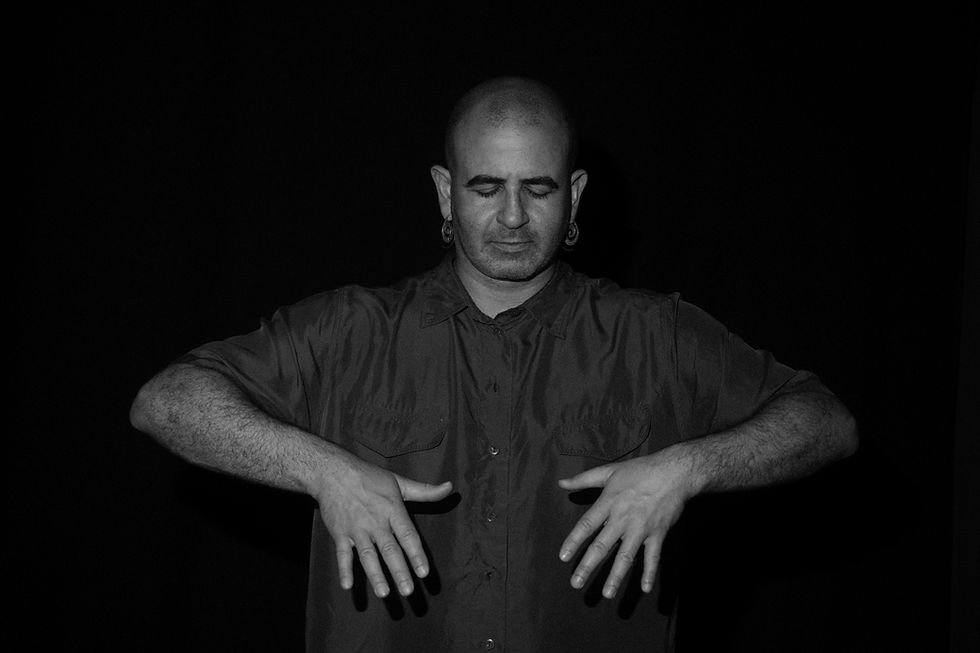
Living and working as a dance artist in Mannheim, I have become increasingly aware of two developments unfolding simultaneously within the performing arts.
The first is the growing number of projects that invite members of the public onto the stage through open calls and participatory formats. The second is a growing uncertainty about the conditions under which professional artistic work can be sustained over time. Perhaps these developments are unrelated. Yet their coexistence raises questions.
Recently, I came across a statement by Simon Möllendorf from Produktionshaus NAXOS Frankfurt that articulated a concern I have encountered repeatedly within the independent arts sector:
Although the statement emerged from a specific funding debate in Frankfurt, it touches a broader issue: how professional artistic labor is valued and understood.
Independent artistic production requires years of training, research, experimentation, technical expertise, collaboration, and risk-taking. It depends upon conditions that allow artists to develop practices over long periods of time. Yet discussions about participation, accessibility, and inclusion do not always address the infrastructures that make such work possible.
This is not an argument against participation. On the contrary, participatory projects can create meaningful artistic encounters, expand access to cultural spaces, and strengthen relationships between institutions and communities. Many of the most compelling artistic experiences emerge precisely through such encounters. The question is different.
A growing number of theatres, festivals, and cultural institutions are developing projects that rely on large groups of participants coordinated by relatively small professional teams. At the same time, I observe ongoing concerns among artists about production conditions, opportunities for long-term development, and the sustainability of professional careers in the arts.
Importantly, this situation cannot be explained solely through funding cuts. In Baden-Württemberg, for example, the state government has announced that it will maintain its cultural funding levels for 2026 and continue its co-financing commitments to more than 300 cultural institutions, even as many municipalities face significant financial pressures (Ministry of Science, Research and the Arts Baden-Württemberg, 2026).
Yet this fact does not entirely resolve the concerns that motivate this reflection. From my position within the independent dance field, I continue to perceive a growing uncertainty about the conditions under which professional artistic work can be sustained. Whether this perception reflects broader structural transformations, local developments, or a combination of both is precisely the question that prompts this text.
My concern is not that participation devalues artistic work. Rather, I wonder whether participation is sometimes being asked to respond to challenges that are fundamentally economic and structural. Participation can expand access to culture, but it cannot replace the need for sustainable professional working conditions.
The issue, therefore, is not participation versus professionalism. The challenge is whether both can coexist within the same cultural ecosystem. Can cultural institutions continue expanding participation while also maintaining the conditions necessary for artistic expertise, long-term research, experimentation, and professional development? Can we broaden access without unintentionally weakening the foundations that allow artistic practices to flourish?
If professional artistic work becomes increasingly difficult to sustain, the consequences may not be immediately visible. They may emerge gradually through shorter careers, fewer opportunities for artistic development, and a reduced capacity for experimentation and innovation.
My observations begin in Mannheim and are informed by debates taking place in Frankfurt, but I suspect the question extends beyond both cities. If similar tendencies are emerging elsewhere, then we should be asking not only what kinds of art we are producing, but also what conditions are making those forms possible.
What kind of future are we creating for artistic labor? What place will remain for expertise, long-term artistic development, and professional practice? And are we paying enough attention to the conditions that will shape that future?
I do not offer these reflections as conclusions. They emerge from observations, professional experience, and conversations taking place across the field. Rather than proposing answers, this text seeks to open a space for collective reflection. It may also serve as a point of support for artists, cultural workers, institutions, and audiences who wish to think together about how professional artistic practice can be sustained while participation, accessibility, and inclusion continue to expand.
If the future of independent artistic production concerns us, then it is a future that must be imagined collectively.
Perhaps the question is not simply what kinds of performances we will create in the future. The question is who will still be able to make them.
Sources & Inspirations
Reason, M. (2015). Participations on Participation: Researching the ‘Active’ Theatre Audience. Participations: Journal of Audience & Reception Studies, 12(1), 271–279.
Möllendorf, S. (2026). Public statement on funding recommendations for the independent performing arts sector, shared via the Instagram account of Produktionshaus NAXOS Frankfurt: https://produktionshausnaxos.de/wp-content/uploads/2026.06.08_Statement_Produktionshaus-NAXOS2-Kopie-1.pdf
State of Baden-Württemberg, Ministry of Science, Research and the Arts (2026). Public statement regarding the continuation of cultural funding and co-financing commitments for cultural institutions in Baden-Württemberg: https://www.baden-wuerttemberg.de/de/service/presse/pressemitteilung/pid/kultur-kann-sich-auf-land-verlassen-1?utm_source=chatgpt.com
I would be happy to hear your reflections in the comments below. If these questions resonate with you, feel free to reach out through my online channels and continue the conversation.

Leonardo Rodrigues is a dance artist based in Mannheim, holding an MA in Contemporary Dance Education. He works as an autonomous educator, performer, researcher, and choreographer, using choreography to create conditions for exchange and to shift perception between people.

Comments