

Inside the Structure, Without Belonging to It

Updated: May 11
Between the desire for autonomy and the actual conditions of work, artistic practice reorganizes itself — not always in the direction of freedom.
This text is a personal reflection based on my experience living and working as an independent dance artist in Mannheim, Germany. It reflects on the institutional conditions surrounding autonomous artistic work and how they shape both artistic practice and the ways artists organize themselves in order not to disappear.
As an autonomous artist, I work within systems where continuity depends on project-based funding, institutional frameworks, and the constant negotiation of access to resources. I write from within these conditions — not outside of them — while trying to understand how they shape my practice, my relationships, and my sense of belonging within the structures that sustain this field.
Writing publicly about these tensions is not an attempt to provoke for its own sake. It comes from a growing need to articulate something that has long accompanied my work and exchanges with others: the distance between the promise of artistic autonomy and the actual conditions required to sustain it.
...
I live precariously as an independent dance artist. Or perhaps not entirely independent. There is a tension here that motivates this writing: I am partially employed within the dance field, yet my projects depend recurrently on the support of publicly funded institutions — at the level of the city and the state. I write, therefore, from this in-between position — neither fully embedded in a stable structure nor entirely outside of it.
From here, the question deepens: what does independence mean when the continuity of one’s work is directly tied to institutional funding mechanisms? This dependence creates a relationship — but what kind of relationship is it, and what does it produce over time?
In practice, I notice how easily I participate in a recurring cycle: the need to access resources leads to constant participation in workshops, training programs, and development processes focused on project design and applications. Learning how to write proposals, adjusting language, responding to institutional criteria — all of this gradually occupies a central place in the practice.
Over time, this participation begins to reorganize my attention: it shifts away from artistic inquiry toward maintaining the conditions needed to stay within the system. It becomes less about creating and more about following the rules in order to exist. This works as a localized adjustment: a constant calibration to each context, where artists absorb its logics and begin to operate within them to sustain continuity.
At the same time that artists learn to adapt themselves to these systems in order to continue working, another movement also becomes visible: a growing number of dance professionals arriving in the city. This is not a statistical claim, but a concrete perception of everyday life — Mannheim hosts two professional dance schools and continues to attract artists who move here for various reasons, as I once did.
What becomes difficult is that this growth does not seem to be accompanied by a proportional expansion of working conditions or structural support. The field becomes increasingly populated, but not necessarily more structured. As a result, a subtle sense of competition begins to intensify alongside a shared condition of fragility.
Within this condition, I notice how many artists begin searching for ways not to remain completely alone — ways to stay connected, continue working, access resources, and sustain some form of continuity while still carrying the idea of being independent artists. More and more, this seems to happen through already existing structures such as Vereine — a German form of association organized around shared interests and collective activity, often officially registered as an e.V. (eingetragener Verein).
I learned a common joke in Germany: “Treffen sich drei Deutsche, gründen sie einen Verein.” (“If three Germans meet, they create an association.”) Over time, I started recognizing something of this logic within the dance field itself. The Verein already exists here as a familiar and socially recognized structure for organizing collective activity, and because of that it easily becomes one of the main forms through which independent artists attempt to survive, remain visible, and access support.
In dance, this creates another layer of complexity. Many professionals working in the independent scene are foreigners, migrants, or artists who do not fully speak the language, yet they often encounter these structures as one of the few existing paths for continuity and legitimacy within the system.
But it is precisely here that I need to take a position: I do not identify with the Verein model. I recognize its historical importance and its role in collective organization, yet in practice it appears to me largely as a resource already structured by the system itself — a format we accept because it seems to be one of the few available ways not to remain alone, especially in moments of crisis.
This raises a tension that is not only personal: to what extent does the Verein model organize the community, and to what extent does it also condition it to operate within predefined limits? And what happens when forms of organization also become forms of containment?
...
I do not have clear answers to the questions that run through this writing — about what independence means, about the relationship to the system, and about the sustainability of the formats and structures that currently organize this practice. What I do have is a growing distance from what is already in place, and an increasing difficulty in continuing to believe that these formats constitute a truly sustainable horizon.
Not because there is no effort to support artistic work — there is. But because this effort seems to operate within very specific conditions that end up defining how we are expected to organize, collaborate, and exist.
Verein structures do seem to solve certain problems — enabling access to resources, sustaining collective work, and creating forms of continuity. And yet, I am not convinced that the Verein model is truly an answer. In many cases, this implies adhering to pre-existing collective formats not necessarily out of choice, but as a way of not disappearing.
I recognize how I, too, remain within these structures under these conditions, and although I acknowledge their function, I have not yet found a way to fully align with them — particularly when the forms of working together do not necessarily produce a shared force, but rather a coexistence structured by necessity.
If the condition for working together is to formalize ourselves into fixed structures, then perhaps the question is not whether to join them or reject them, but whether we need to rethink what it means to become an institution at all. These structures come to be perceived as the only viable path, in the absence of other forms that have yet to be articulated. But are they?
From where I stand, discomfort begins to appear around what is often framed as “support.” I recognize the effort behind it, but in many cases it does not emerge from what I or others actually need. Instead, it comes already shaped — defining in advance how support should function, and how I am expected to adapt in order to access it.
Over time, I notice a shift in my own practice. Instead of responding to urgencies, I find myself learning how to navigate formats — adjusting, rewriting, repeating. Something changes in that process. Not because of a lack of intention, but because the logic of support starts to move on its own, slightly detached from the conditions it is meant to sustain.
...
I take some distance to listen more closely. Differences are there — often strong — but they rarely surface. They remain contained within an unspoken rule: to stay politically correct and keep things running. This is where the discomfort stops being only personal.
The risk I take in staying with this position is real. It means that I may fail by not fully aligning with the only system that currently allows this work to exist. I don’t think I am alone in this — many of us remain within it, not out of conviction, but because we have learned to accept it as the only possible way to continue.
From this perspective, a difficult feeling emerges: everything begins to operate under a logic of survival. When most of the energy is used to remain active within the system, the space for risk, displacement, and deeper transformation starts to shrink.
If institutional structures were to disappear, I would continue. Not because I have a solution, but because my relationship to practice does not begin or end there. I understand my work not only as a profession, but as a way of existing. In that sense, the precariousness present in my work — both in its conditions of production and in its aesthetic — is not accidental. It reflects this position and becomes, at times, a potential form of force.
If this text is not about offering answers, then perhaps the most honest gesture is to sustain the questions — and not allow them to settle: What kind of independence are we actually practicing? And at what cost is this independence maintained?
If something here feels familiar, stay with it—and write from within that place in the comments below. I’d value hearing how it meets you.

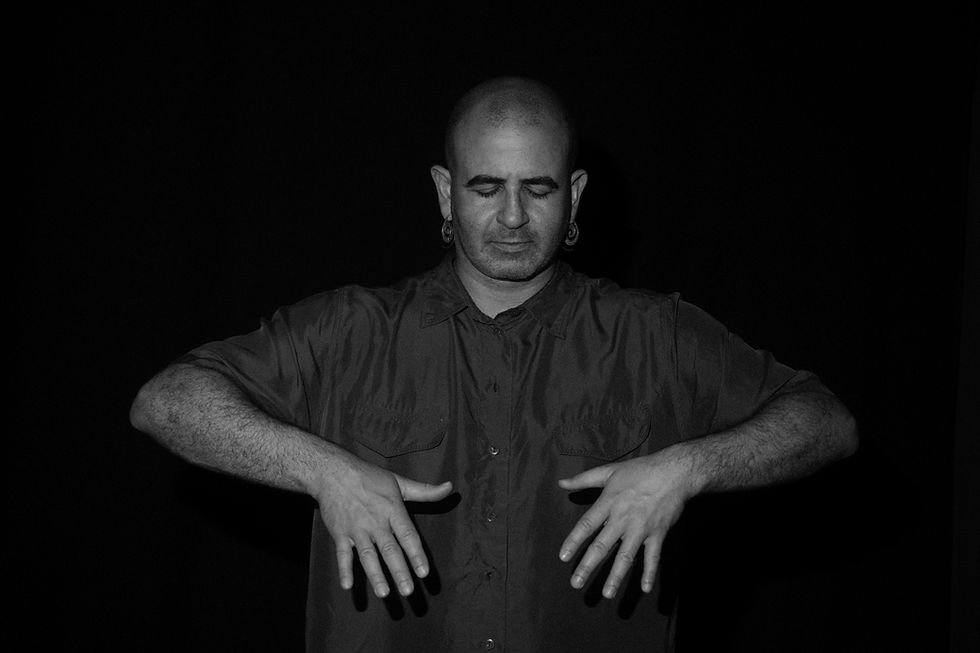
Leonardo Rodrigues is a dance artist based in Mannheim, holding an MA in Contemporary Dance Education. He works as an autonomous educator, performer, researcher, and choreographer, using choreography to create conditions for exchange and to shift perception between people.

Comments