

Between Colapse and Responsibility

Updated: May 12
Notes from a dancer learning to work without certainty
I spent years learning how to follow direction: to adapt quickly, perform coherence, endure pressure, and trust structures that promised orientation through hierarchy, discipline, and recognition.
Now I live in a moment where many of those structures no longer feel trustworthy, yet their logic continues surviving inside the body.
This text moves through that contradiction: the difficulty of no longer believing entirely in inherited forms of authority while still not knowing how to live, create, decide, and build collective responsibility differently without reproducing them.

Something is not working within the structures I inhabit—in art, in work, in the way relationships and institutions organize themselves. And still, I continue sustaining things I already know no longer support me.
I notice it in rehearsals, meetings, collaborations, and conversations that continue without conviction. Institutions continue performing coherence while exhaustion quietly accumulates underneath.
I live in a moment where guidance, authority, and trust no longer operate as they once did. What is collapsing is not structure itself, but the belief that structures necessarily carry ethical clarity, stability, or direction.
Perhaps what is disappearing is the patriarchal fantasy that someone above should know how to organize life completely, absorb uncertainty, and provide answers for everyone else.
I realize how deeply I internalized that logic.
As a dancer, I spent years learning through imitation, repetition, correction, and approval. I learned styles by copying bodies already legitimized. Most of the choreographers and directors who shaped my formation were men, and much of that learning happened through visible and invisible systems of confirmation: right or wrong, good or bad, acceptable or unacceptable.
Over time, movement was not the only thing being shaped.
Personality was also choreographed.
I learned that being “professional” often meant controlling emotion, adapting quickly, enduring pressure silently, accepting hierarchy, and performing certainty even when insecurity was present. Dominance slowly became associated with competence inside my perception of professionalism.
I can recognize now that much of this came from external pressure and institutional formation. But it also became part of how I related to work, authority, collaboration, desire, and creation itself.
And because dance happens through the body, these structures did not remain intellectual.
They entered posture, reaction, breath, attention, and behavior.
The body remembers what institutions, rehearsals, relationships, and histories repeatedly taught me about fear, authority, permission, belonging, and value.
Often the body recognizes a threshold before language fully understands it.
Now I live in a time where many of those structures are being questioned.
And I question them too.
But questioning something intellectually does not mean it disappears from the body.
Even while creating my own artistic work, I still notice voices from the past inside the process: voices evaluating, correcting, judging whether something is right or wrong.
My work has always searched for fluidity, openness, transformation, and freedom. But sometimes I still feel how this freedom exists inside an invisible cage built from structures I internalized long ago.
Sometimes I no longer know whether the limit comes from present reality or from authority still alive inside me.
At the same time, contemporary forms of life increasingly demand autonomy, flexibility, self-management, and responsibility, while the collective conditions necessary to develop these capacities become more fragile.
I often feel unprepared for the responsibilities this condition demands.
Not because I refuse responsibility, but because I was never fully taught how to navigate uncertainty, shared responsibility, or collective freedom differently.
I learned how to follow direction more than how to negotiate orientation collectively.
So I remain somewhere between paradigms: no longer fully trusting old structures, but not yet knowing how to build new forms of relation, responsibility, and orientation.
And even while I question hierarchical authority intellectually, part of me still searches for certainty, permission, and confirmation.
Part of me still waits for someone more legitimate to confirm direction before I move.
The anxiety is not only about failure.
It is also about no longer being able to transfer responsibility elsewhere.
Freedom does not immediately feel liberating when someone was formed inside structures organized through authority, correction, and external validation.
There is grief in realizing that certainty never protected me from responsibility.
I am grieving forms of guidance that no longer make sense to me while still not knowing what replaces them.
This grief is not abstract.
It appears as hesitation, exhaustion, instability, avoidance, and sometimes loneliness.
I increasingly notice how exhaustion organizes behavior today. Sometimes I cannot distinguish whether hesitation comes from fear, resistance, exhaustion, or from the absence of conditions necessary to move differently.
I also notice how often I still wait: for alignment, for clarity, for leadership, for certainty.
But when leadership appears, distrust appears with it.
I learned to recognize manipulation, institutional self-protection, and performances of authority. But critique alone does not teach me how to build trust differently.
And I do not yet fully trust myself enough to replace what collapsed.
Part of what makes this moment difficult is that I am still learning how to inhabit forms of collectivity that do not depend entirely on domination, permission, fear, or centralized authority.
And I am learning while already inside the transition.
I no longer believe entirely in centralized authority. But I also do not think horizontal structures automatically eliminate domination. Sometimes hierarchy disappears formally while reproducing itself emotionally, socially, and invisibly.
So I keep asking myself:
How do I build collective responsibility without reproducing the same structures I claim to reject?
I do not yet know.
And maybe part of honesty is admitting that.
Because I speak about collectivity while still learning how to trust it myself.
I also think a lot about desire.
Not desire as fantasy or individual impulse, but as something shaped by history, migration, geography, language, memory, and social conditions.
Living as a Brazilian in Germany changed not only what I want, but how I understand recognition, precarity, ambition, intimacy, and belonging itself.
The question “What do you desire?” cannot exist outside the conditions that formed the person asking it.
Desire is never neutral.
It carries contradiction, projection, memory, illusion, and history.
And still, desire matters to me because it often reveals where life continues insisting beneath adaptation and fear.
To sustain desire is not to obey every impulse, but to remain accountable to what repeatedly asks to exist through me.
I no longer experience a clear separation between the individual and the collective.
The collective is not something outside me. It appears through the ways responsibility, avoidance, silence, risk, and care circulate between people.
Thought alone does not reorganize a life. The body often remains attached to patterns long after consciousness identifies them.
What I know is that I can no longer remain inside systems that slowly reduce the conditions necessary for growth, honesty, transformation, and collective learning.
I am at a threshold.
And thresholds are uncomfortable because they remove the illusion of neutrality.
No one decides for me anymore.
And maybe that is exactly what feels frightening.
I spent years learning how to receive direction.
Now I am trying to learn how to remain present inside uncertainty without waiting for certainty first.
Lately, I have also noticed that intellectual understanding alone rarely transforms behavior.
Avoidance survives in habits, gestures, rhythms, postures, and bodily responses.
So sometimes I try something simple.
I choose one object directly connected to something I have been avoiding: a message, a task, a conversation.
I go to it.
I touch it.
And before interpretation appears, I notice what happens inside my body.
Sometimes that small gesture already changes something.
Not because it solves the problem completely, but because it interrupts the distance between thought and action.
Perhaps that is part of what I am trying to learn now: how to remain present in the consequences of my choices without waiting for external confirmation first.
Something has already shifted...
...and I still do not fully know toward what.
If something here feels familiar, stay with it—and write from within that place in the comments below. I’d value hearing how it meets you.

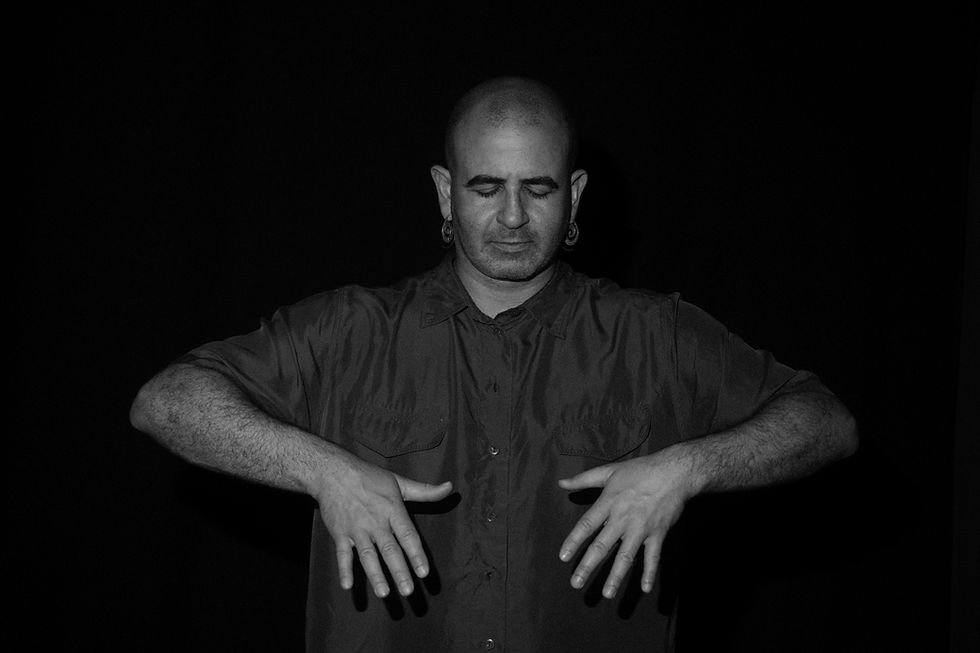
Leonardo Rodrigues is a dance artist based in Mannheim, holding an MA in Contemporary Dance Education. He works as an autonomous educator, performer, researcher, and choreographer, using choreography to create conditions for exchange and to shift perception between people.
Comments